



Programme: INTERREG Baltic Sea Region Programme 2021–2027, Priority “Innovative societies”
Project Objective: To develop an interactive public garden system in the Baltic Sea region that supports the health, well-being, and social satisfaction of various population groups, and promotes public education.
Partners:
Zemgale Planning Region – Lead Partner (LV)
Institute of Horticulture (LV)
Dobele Municipality (LV)
Tukums Municipality (LV)
Vidzeme University of Applied Sciences (LV)
Administration of Biržai District Municipality (LT)
Klaipėda Pedagogical and Psychological Service (LT)
Directorate of Aukštaitija Protected Areas (LT)
Estonian University of Life Sciences (EE)
Rakvere City Government (EE)
Natural Resources Institute Finland (FI)
NGO Elonkierto Exhibition Park (FI)
Aarhus University (DK)
Main Activities:
Creation of interactive gardens or their elements in partners' territories. Development of an interactive garden to meet the needs of residents in the Krasta residential area in Dobele, on the left bank of the Bērze River, utilizing local biodiversity resources and small architectural forms (focus on green care, health, and education).
Participation in the development of a universal methodology for creating public outdoor spaces according to the needs of target population groups, based on scientific findings on human-nature interaction.
Participation in providing a joint platform with the digitization of public gardens created within the project (creation of demo samples of various gardens, including practical tips, scientific articles, etc.).
Exchange of knowledge and experience among partners regarding the diversity of public garden/park functionality.
Transfer of the interactive public garden system to various social groups (Mobile Application “Dobele Municipality”).
Total Partner Budget: EUR 2,790,120.00, incl. ERDF – EUR 2,232,096.00
Dobele Municipality Budget: EUR 143,800.00 (incl. VAT)
ERDF co-financing (80%): EUR 115,040.00
Municipal co-financing (20%): EUR 28,760.00
Implementation Period: November 1, 2023 – October 31, 2026
Project Manager: Taiga Gribuste
Project Manager, Development and Planning Division, Dobele Municipality
Contact Information: Phone: +371 63720931, Mobile: +371 29187997; taiga.gribuste@dobele.lv
Project Summary:
20.10.2026. Project Update
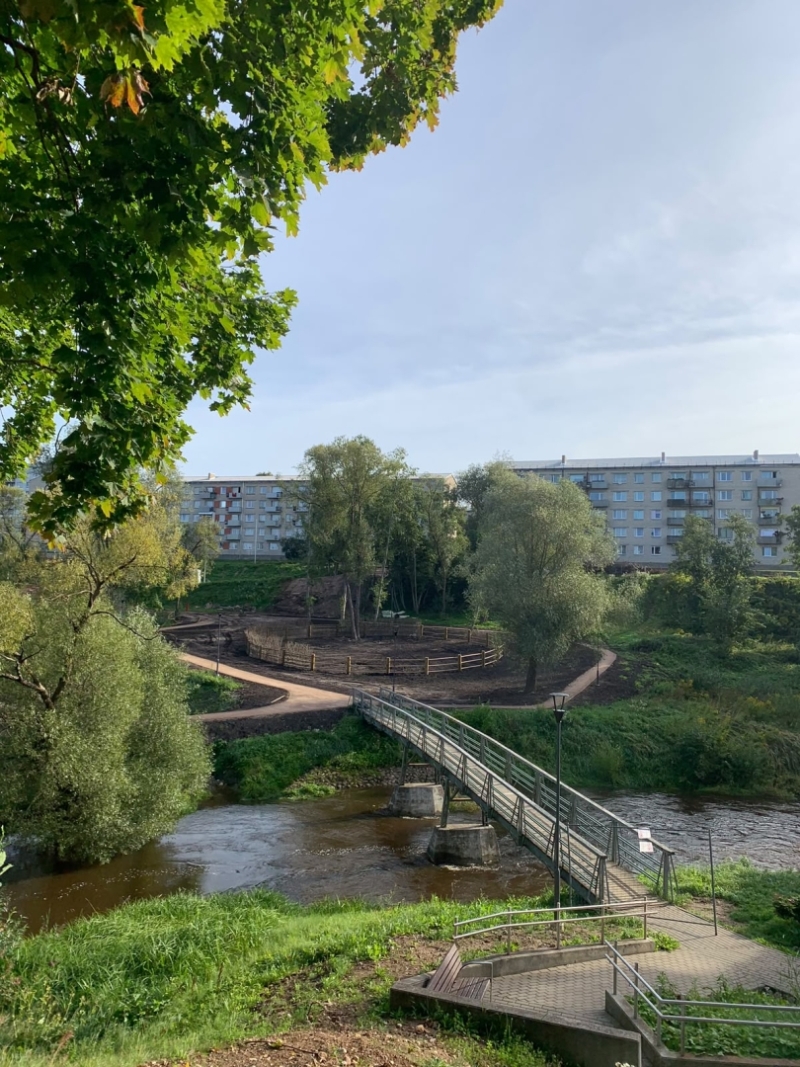
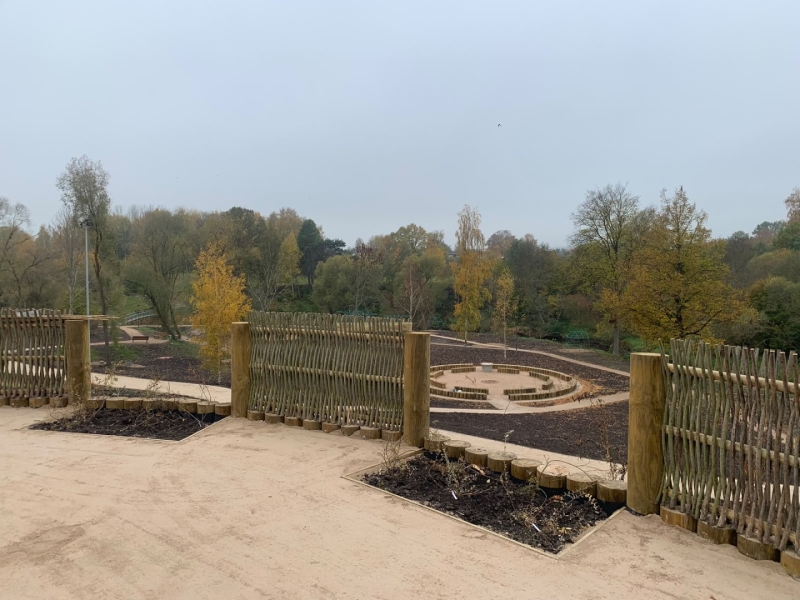
An Interactive Willow Park Has Been Created on the Left Bank of the Bērze River on Krasta Street in Dobele
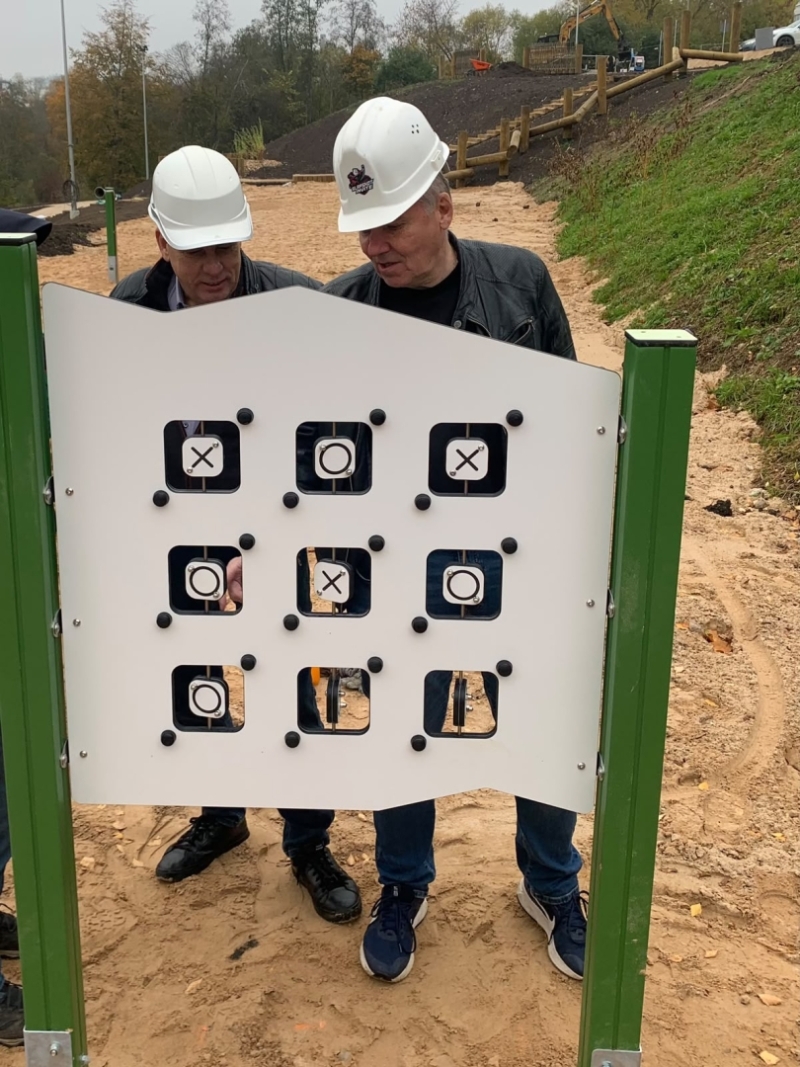
The project “Integrated system for interactive public garden development bin Baltic Sea Region” (INTERACTIVE GARDENS #C036) is nearing completion. An interactive Willow Park has been created for local residents and visitors, promoting the health and well-being of people of all ages while serving an educational purpose by introducing visitors to various willow species.
The park will become not only a place for individual walks but also a gathering place for the local community, offering opportunities to host themed events in the outdoor classroom with a fire pit, play with children and four-legged friends, and enjoy outdoor physical activities on the green open spaces.
To improve accessibility, a parking area and concrete steps with landscaped greenery have been constructed. A system for collecting rainwater and floodwater has been installed, and a network of walking paths and lighting has been created, making the park accessible even after dark.
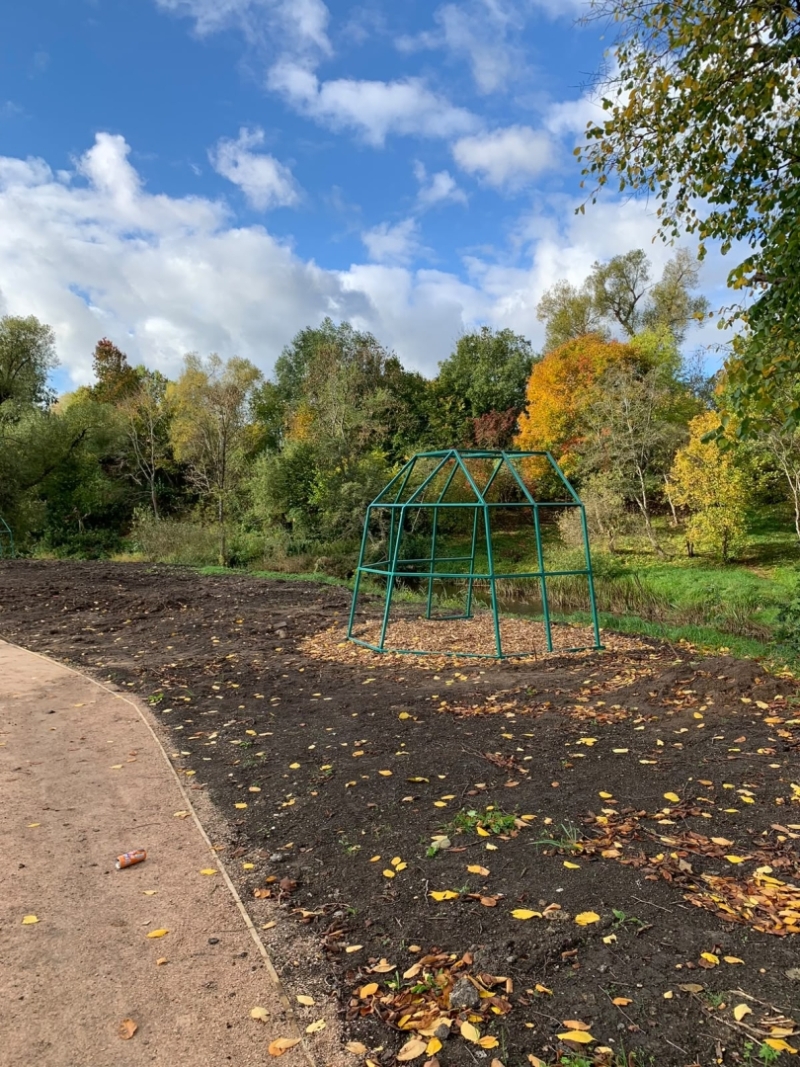
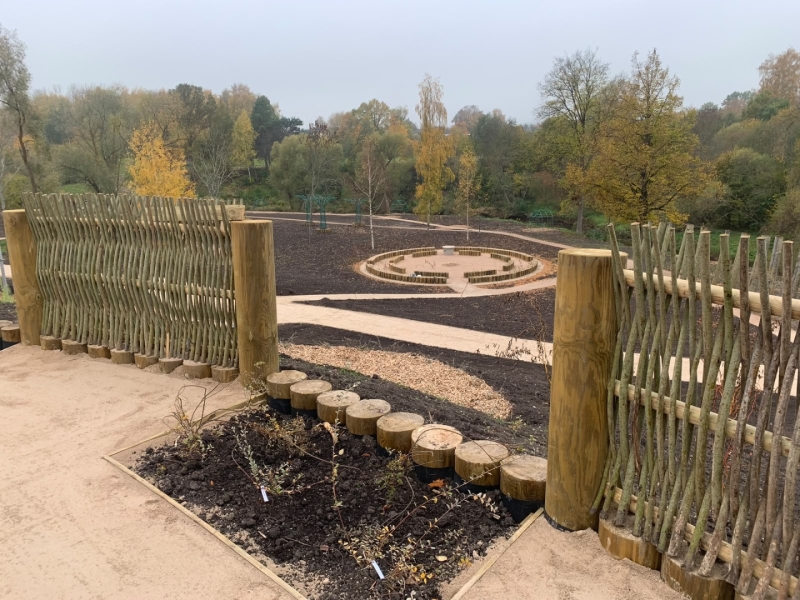
The park features several attractive and functional landscape elements, including an outdoor classroom with a fire pit and log seating; three metal gazebos situated right on the riverbank, which will gradually become covered with climbing willow branches; and three umbrella-shaped gazebos with log seating. A landscaped “dry stream” has also been created, with various plants growing along its banks to filter rainwater before it flows into the river. Over time, the arches spanning the walking paths will also become covered with woven willow branches.
Dog owners will be able to let their pets roam freely in a fenced area enclosed by a traditional woven wattle fence, modelled on the design described in Latvian Wooden Buildings and Household Items by August Bielenstein, a long-serving pastor of the German congregation in Dobele, linguist and ethnographer.
The park features a collection of eight willow species, which can also be found in other landscaped areas throughout the park. Several wooden environmental art installations have been created on the slope. The children's play area includes play elements made from natural timber.
A viewing platform has been created at the upper end of the park, offering panoramic views of the entire park.
Overall, Dobele's Interactive Willow Park has become part of the network of publicly accessible interactive gardens and parks in the Baltic Sea Region, fulfilling one of the project's key objectives.
The park has been marked on the map on the website showcasing the public gardens established through the project. It will be promoted across the participating countries in the project area and on visitdobele.lv.
Photos: PROJEKTS “INTEGRATED SYSTEM FOR INTERACTIVE PUBLIC GARDEN DEVELOPMENT IN BALTIC SEA REGION” | Flickr
10.07.2026. Project Update
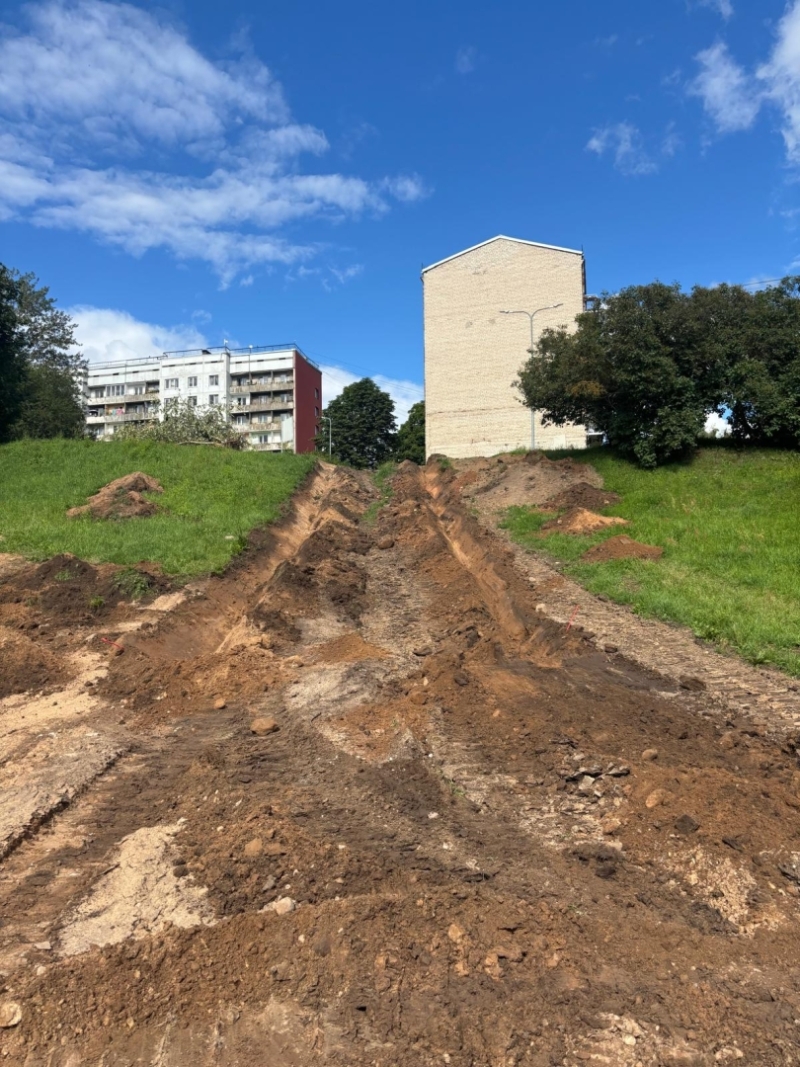
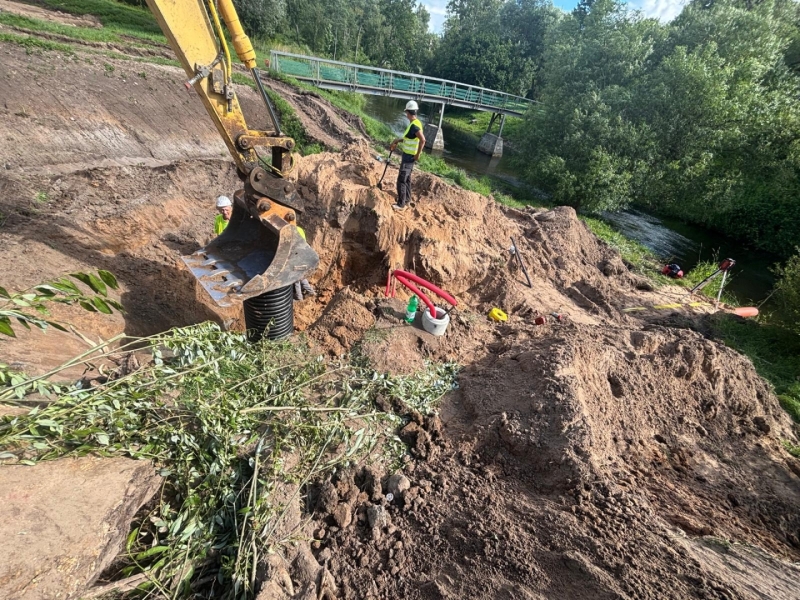
Landscaping and construction works for the creation of the interactive Vītolu Park in the Krasta residential area in Dobele, on the left bank of the Bērze River, have been successfully launched. Construction work is being carried out by SIA “JM 15”, construction supervision by SIA “Somniar”, while two contracts have been concluded for author supervision – with IK “Kārkliņš un Ābele arhitektu birojs” and SIA “Livland Group”.
Since the signing of the contract, the following works have been completed:
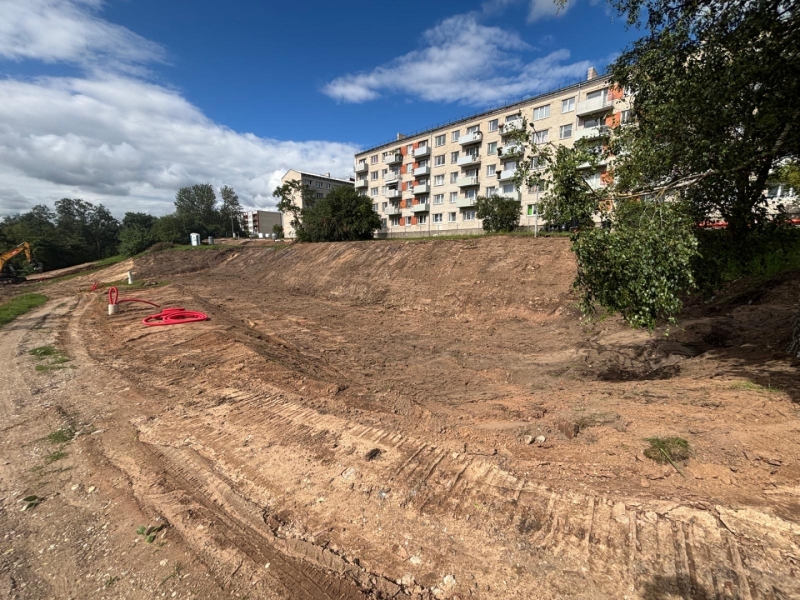
Excavation for the parking lot has been completed; construction of the parking lot will begin shortly;
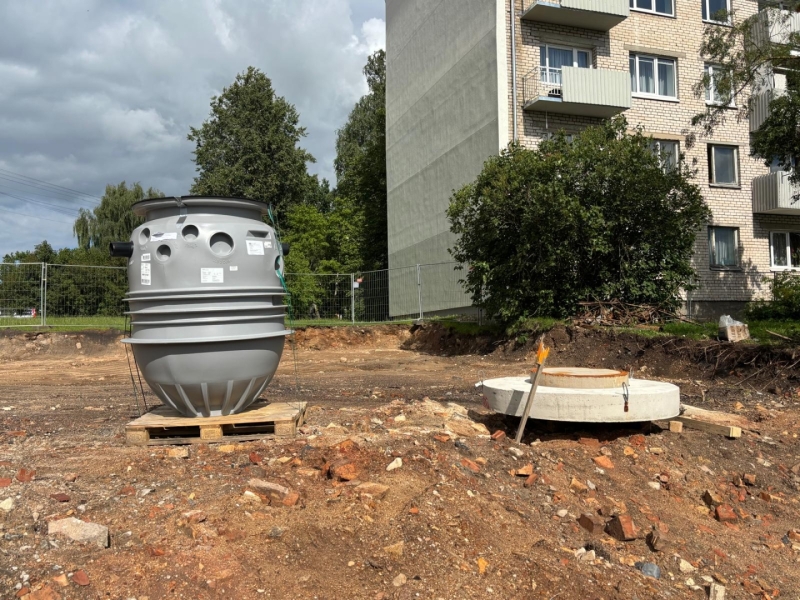
Construction of the storm water drainage network has started;
Construction of concrete stairs has commenced;
Power supply network (ELT) installation works are ongoing;
In parallel, grading and leveling of the excavated soil across the entire territory is taking place. Grading works for the "dry" creek have been completed.
Works are proceeding according to the planned schedule.
On July 3, project partners attended a DEMO Day with an extensive progress report program at the Institute of Horticulture of Latvia. A great deal has been accomplished – a huge collective effort has been invested from the project idea to implementation and results. Comprehensive, structured information stands have been installed throughout the territory, allowing any visitor to independently navigate to areas of interest in the garden using QR codes. Raised garden beds accessible to all target groups have been installed, and scientists have conducted several masterclasses on garden plant cultivation. Furthermore, a public garden website has been created (which will be further updated towards the conclusion of the project), a map featuring demonstrations of various types of gardens and parks has been established, an evaluation methodology has been developed, a description of the Baltic public garden concept has been drafted, and a virtual reality model of the garden has been created. The project also includes piloting – the transfer of acquired knowledge.
All project activities are scheduled for completion in October this year.
23.04.2026. Project Update
The establishment of the interactive Vītolu Park in the Krasta residential area in Dobele, on the left bank of the Bērze River, is scheduled to begin in May. The procurement process has been completed, and the ex-ante verification of the procurement is currently underway prior to contract signing.
It is planned to utilize local biodiversity resources and small architectural forms, with a focus on green care, health, and public education.
The project foresees the construction of a pathway network while preserving the existing routes, the creation of a willow collection, and additional plantings throughout the territory, as well as the construction of arches, pergolas, and gazebos.
A rock garden (rockery) and a "dry" creek with rainwater-purifying plants will be created. Concrete stairs, a fenced dog walking area, a "green" classroom with a campfire spot, a viewing platform, and an improved children's play area with a sandbox and wooden climbing elements will also be constructed.
The territory will be illuminated and equipped with video surveillance. To improve environmental accessibility, a parking lot and a stormwater drainage system will be built between the apartment buildings at Krasta Street 9 and 11.
The landscaping and construction works are planned for completion this autumn.

13.10.2025. Project Update
It was previously reported that Dobele Municipality, together with 12 other project partners, has joined the INTERREG Baltic Sea Region Programme 2021–2027 project “Development of an integrated system for the interactive development of public gardens in the Baltic Sea region” (“INTERACTIVE GARDENS” #C036).
The objective of the project is to develop an interactive public garden system in the Baltic Sea region that supports the health, well-being, and social satisfaction of various population groups, and promotes public education.
One of the project activities includes the physical creation of interactive parks within the partners' territories. In the case of our municipality, the area located in the Krasta Street residential area on the left bank of the Bērze River was selected, utilizing local biodiversity resources and small architectural forms.
As the landscaping works approached, Dobele Municipality invited all residents to participate in an autumn cleanup workday on October 10 at the future Vītolu Park, so that it may soon become a beautiful and well-maintained place for everyone.
Thanks to the responsiveness, determination, and hard work of our community members, an impressive amount of work has been accomplished: most of the area has been cleared of unsuitable trees and bushes, making way for various willow varieties to be planted next year alongside the installation of small architectural forms.
Residents can view visualizations of selected elements on the information board installed at the end of the building at Krasta Street 9 during the cleanup event.

An indispensable part of the day was the shared soup for all cleanup participants.
Special thanks for supporting the event goes to the residents of the apartment buildings at Krasta Street 9 and 11, municipal employees, and project partners – representatives from the Zemgale Planning Region and the Institute of Horticulture, as well as volunteers from the 51st Infantry Battalion of the National Guard.
Additionally, craftsman Rihards Skrastiņš led a masterclass on weaving wattle fencing (zedeņu žogs) for the participants, giving everyone interested the opportunity to try their hand at creating a demo version of the fence. It is expected that similar woven elements will be featured in Vītolu Park, and the acquired skills can serve as a practical and beautiful solution for anyone to use for bordering flower beds, creating enclosures, or as a decorative barrier in their own garden.


Project Update 24.septembris 2025.
International Conference in Zemgale Outlines the Future of "Smart Gardens"
What will future public green spaces look like, what technologies will be used to manage them, and can a garden become part of healthcare? Answers to these questions were sought by invited industry experts and project partners from Latvia, Lithuania, Estonia, Finland, and Denmark, who gathered at an international conference in Koknese on September 17 and 18.
The event was organized by the Zemgale Planning Region as part of the Interreg Baltic Sea Region Programme project “Development of an integrated system for the interactive development of public gardens” (Interactive Gardens).
Throughout the conference, a strong consensus emerged: a modern garden is no longer merely an aesthetic place for relaxation, but a multifunctional ecosystem where the latest technologies, science, and a deep understanding of human needs intersect. As a striking example of Latvian innovation, the Bulduri Technical School presented its "smart garden" (iDārzs), which features an automated irrigation system, sensors, and even a robot that gathers data on plant health, demonstrating how technology can make park management more sustainable and resource-efficient.
Special attention was given to the impact of green spaces on public health and well-being.
Finnish partners introduced the unique "Health Forest" model, where nature is integrated into the healthcare system—specially designated natural areas are located near healthcare facilities, allowing doctors to prescribe a "prescription" for a forest visit to promote recovery and improve mental health. The effectiveness of this approach was confirmed with concrete data by Lithuanian partners: in a survey conducted by the Klaipėda Pedagogical and Psychological Service regarding the newly established Japanese Garden, 100% of visitors acknowledged that their visit improved their mood. This well-being dimension, which is particularly important for senior citizens, is complemented by a social aspect—the opportunity to meet and be together. The need for accessible and convenient gathering places was emphasized by a representative of the Senior Communities Association of Latvia, who praised the goal of the "Interactive Gardens" project to create precisely these types of inclusive public outdoor spaces.
Expert presentations covered a broad spectrum of ideas—from landscape design philosophy to specific public outdoor solutions. Landscape architect Ludmila Knoka introduced the principles of the "New Perennial" style, which encourages the creation of nature-inspired, sustainable "four-season gardens." These remain aesthetically pleasing even in winter by highlighting plant structures rather than just flower colors. Furthermore, the conference provided insights into best practices from other countries, such as Estonia's experience in transforming Vana-Kalamaja Street in Tallinn into a pedestrian-friendly zone with community gardens, and Denmark's model, where universities take a leading role in creating innovative educational gardens.
"This conference is proof that we in the Baltic Sea region are aligned in our vision—how to create higher quality, greener, and human-centered public spaces. By exchanging such diverse experiences, we gain not only inspiration but also practical tools that municipalities and industry professionals across the Baltic Sea region can use in developing their green areas. Our goal is for the ideas developed within the project to turn into real, tangible work that improves the daily lives and well-being of our residents," emphasizes Sigita Šiļvjane, Project Manager of "Interactive Gardens" at the Zemgale Planning Region.
The project's concepts are already being put into practice.
Lithuanian partners in Biržai are landscaping the hospital park by creating raised beds and installing wind chimes, while the Directorate of Aukštaitija Protected Areas is improving access to a nature reserve by constructing a new bridge and enriching the landscape with hundreds of newly planted trees. Similarly, the lead partner, Zemgale Planning Region, is preparing for practical landscaping works that will take place next season.


Project No. C036 “Integrated System for Interactive Development of Public Gardens in the Baltic Sea Region” or “Interactive gardens” is implemented with the support of the Interreg Baltic Sea Region Programme 2021–2027. The total project funding is EUR 2,790,120 (incl. ERDF co-financing of EUR 2,232,096). Read more about the project: https://www.zemgale.lv/lv/projekts/integreta-sistema-interaktivai-publisko-darzu-attistibai-baltijas-juras-regiona
This publication has been produced with the financial support of the European Union. Its contents are the sole responsibility of the Zemgale Planning Region and do not necessarily reflect the official views of the European Union.
13.05.2025. Project Update
Masterclass During the Lilac Blooming Season
On May 13, project partner Institute of Horticulture organized an engaging masterclass on the species and varieties of lilacs and small-fruited (ornamental) apple trees as part of the “Interactive Gardens” project. The event primarily invited public garden creators across Zemgale from all partner municipalities—utility services, gardeners, municipal developers and planners, as well as public territory managers. Dobele Municipality brought together 5 interested participants.
The masterclass included theoretical insights on lilacs (presented by Dr. biol. Sarmīte Strautiņa): their origin, history, Latvian and international breeding experience, care, propagation, analysis of the strengths and weaknesses of various varieties, planting in public outdoor spaces, and adaptation to different climate zones. The cultivation of small-fruited (ornamental) apple trees is also becoming increasingly popular. Through its projects, the Institute of Horticulture is actively working on selecting and developing apple varieties suitable for the conditions of Latvia and the Baltic region. These trees are used more and more frequently for food, hedges, and environmental landscape design (presented by Dr. biol. Laila Ikase).
The practical portion of the masterclass featured a guided walk through Peter Upitis' Lilac Garden, where the lecturers answered participants' questions in direct context with the preceding lectures. The timing chosen for the masterclass was exceptionally beautiful—the full bloom of ornamental apple trees and the early varieties of blooming lilacs surrounded the participants in a cloud of aromas and colors.
Public gardening masterclasses and the transfer of specific knowledge will help build capacity among municipal specialists and non-governmental organizations.


16.04.2025. Project Update
On April 7, partners of the “Interactive Gardens” project met at the House of the European Union in Riga, where an engaging discussion took place on the achievements so far and future challenges—both in creating modern interactive gardens and in developing innovative digital solutions and finding the best ways to engage visitors.
The title of the project, "Interactive Gardens," reflects its main focus—creating gardens that not only please the eye, but also actively engage visitors and provide opportunities to receive feedback. During the meeting in Riga, several key steps toward achieving this goal were discussed. As one of the essential elements, a unified visitor survey questionnaire is planned to help assess both the functionality of the new gardens and the visitor experience. Shortly, in cooperation with Vidzeme University of Applied Sciences, which is responsible for methodology and data analysis in the project, the timing and methods for surveying in each of the participating gardens will be finalized, with plans to launch data collection as early as this 2025 season.
Meeting participants also had the exclusive opportunity to be the first to preview another innovative result of the project—a virtual reality (VR) tool being developed by Vidzeme University of Applied Sciences. Although it is still under development, its demonstration provided a clear insight into its potential. Unlike virtual tours, this tool will allow users to create and experience their own dream garden—selecting the landscape and season, planting flora, and observing their development, all while enjoying a relaxing atmosphere with nature sounds.
A significant part of the meeting was dedicated to progress on project activities in each partner country. Zemgale Planning Region continues its preparatory work on creating interactive garden elements in several locations across Zemgale. Several sites are currently in the planning and design phase: Jēkabpils Municipality is preparing the technical project for the thematic garden “Sēlija Zaļo” (Sēlija Grows Green), and Jelgava Municipality is starting preliminary design work for an interactive garden in the Kroņvircava Manor Park. Concurrently, in Aizkraukle Municipality (in Aizkraukle town and Jaunjelgava), Zemgale Planning Region plans to ensure planting and the procurement and installation of specific equipment, such as outdoor drums and solar charging stations. Specific landscaping and planting works are also planned in Karpa Garden in Bauska to complement the existing green structure, replace trees damaged in storms, and install informative plaques near new plantings, turning the garden into an educational and ecologically valuable public space.
Other project partners also shared their completed and planned activities. For instance, the Institute of Horticulture in Dobele Municipality is working on installing new information stands and testing various visitor feedback methods, including QR codes and voting using natural materials. Partners in Finland are preparing to launch several pilot activities in the summer, involving various social groups, such as senior citizens and people with special needs. Meanwhile, partners in Lithuania are carrying out garden landscaping works and organizing procurement procedures for infrastructure improvements.
The partners also discussed other implementation directions that will benefit the broader public. Further work on website improvements was addressed to ensure easier access to information about the gardens involved in the project and planned events, including interactive maps. Additionally, upcoming public gardening masterclasses in Latvia and specific knowledge-transfer events aimed at building capacity among municipal specialists and non-governmental organizations were discussed. As a major future event within the project, an international conference in Zemgale is scheduled for late September this year, organized by Zemgale Planning Region as the lead partner.


13.09.2024. Project Update
Experience Exchange Visits Completed within the "Interactive Gardens" Project
As part of the Interreg Baltic Sea Region Programme project “Interactive Gardens”, a phase dedicated to experience exchange visits has concluded. During joint meetings, project representatives uncovered the experience gained by partners and generated new ideas for creating accessible public gardens and implementing activities. Following the meeting in Zemgale in May this year, project meetings were organized in the other partner countries – Denmark, Finland, Estonia, and Lithuania.
In Denmark, project participants learned about Aarhus University’s cooperation with an open-air museum, practically demonstrating plant varieties and environmentally friendly cultivation techniques for various social groups. Here, practical work and research are conducted for students and pupils, while local communities are provided with opportunities to meet and work together.
Colleagues from Finland outlined the design principles, layout, and community engagement strategies for establishing a therapeutic garden. Project participants visited the Elonkierto Nature Park, which was developed through close cooperation between the Natural Resources Institute Finland, local municipalities, businesses, and community groups. Along the nature trail, visitors can learn how to sustainably utilize nature's gifts – edible and medicinal wild plants. Furthermore, partners explored agricultural plants grown in Finland by observing them in nature, acquiring information from informative stands, and tasting local products. By organizing creative activities for both children and adults using natural and rural materials from Finland, environmental awareness is actively promoted here.
Estonian colleagues shared their experience with introducing meadow plants to urban lawns in Tartu, which require less frequent mowing, thereby reducing noise and dust in the city. On hot summer days, such lawns provide better air humidification and cooling, making the urban environment more pleasant. In Rakvere, the transformation of a former gravel pit into a beautiful, greened space suitable for sports, recreation, and cultural events was demonstrated.
Lithuanian colleagues in Biržai and its surroundings showed how storytelling, visual materials, and visitor engagement can be used to reveal history, explain geological processes, and preserve culinary traditions. A defining and daily element of the Biržai area is karst sinkholes, which continue to form—for instance, 49 new sinkhole locations were registered this year alone. Although sinkholes pose a daily challenge to which local residents must adapt, they are also a fascinating tourist destination—for example, the Kirkilai sinkholes and lookout tower have been among the most popular sightseeing spots in Lithuania.
The meetings were attended by project partners from Aarhus University, Biržai District Municipality, the Directorate of Aukštaitija Protected Areas, Klaipėda Pedagogical and Psychological Service, the Natural Resources Institute Finland, Rakvere City Government, and the Estonian University of Life Sciences, as well as representatives from Aizkraukle, Jēkabpils, Tukums, and Dobele municipalities, Vidzeme University of Applied Sciences, and the Institute of Horticulture. Representatives from non-governmental organizations also attended, sharing their wishes and ideas for garden improvements.
The purpose of the project is to develop accessible public gardens to support health, provide a sensory garden experience, and educate visitors through the use of smart and innovative tools, as well as by fostering a deeper perception and feeling of surrounding plants and the environment. Project partners will also facilitate information exchange between neighboring countries to ensure that various garden activities are better known and easily accessible. The project is managed and supervised by specialists from the Zemgale Planning Region. During the first year of the project, experience exchanges took place among partners, and educational and health-promoting activities were organized in cooperation with non-governmental organizations. Garden planning, design, information preparation, and the development of a virtual model are currently ongoing.
Project No. C036 “Integrated System for Interactive Development of Public Gardens in the Baltic Sea Region” or “Interactive gardens” is implemented within the Interreg Baltic Sea Region Programme 2021–2027. The total project funding is EUR 2,790,120 (incl. ERDF co-financing of EUR 2,232,096).
www.interreg-baltic.eu / www.europa.eu
This publication has been produced with the financial support of the European Union. Its contents are the sole responsibility of Zemgale Planning Region and can under no circumstances be regarded as reflecting the official position of the European Union.


04.07.2024. Project Update
This year is dedicated to experience exchange, during which partners visit each participating country to gather ideas for creating gardens and parks that promote interactivity in publicly accessible areas and enhance their functionality across key areas: health, well-being, social satisfaction, and education for various population groups.
From June 12 to 14, project partners visited the Danish city of Aarhus (awarded the title of European Capital of Culture in 2017) and its surrounding region. Aarhus University's Department of Food Science presented its greenhouse crops, breeding methods, and experiments focused on developing climate-resilient plants. Partners also visited the horticultural education center Jordbrugets Uddannelsescenter, where they observed students' practical involvement in the learning process from concept to execution (building raised beds, bricklaying walls, etc.). Interestingly, the school offers educational tours even for primary school children. Project participants also visited a permaculture farm managed by a community of 70 people, who grow most of their own food and regularly supply about 20 permanent clients. The core concept of the farm is that all plants—including weeds alongside crops—can coexist, and every plant serves a specific purpose.
Participants were introduced to the Green Museum (Det Grønne Museum)—the national museum of agriculture, food, forestry, and hunting. The exhibition features a kitchen garden (where the rhubarb is king, with 70 varieties gathered from across Denmark!), presenting agricultural history and scientific processes in an interactive and easily digestible manner.
On June 26 and 27, project partners spent time primarily at the Elonkierto Agricultural Exhibition Park (19 ha). In cooperation with the local municipality and Finnish universities, the park offers a wide range of educational programs for various target audiences. The park is highly popular among visitors—families with children from urban areas have the opportunity to learn about farm animals, their care, and habits, as well as edible plants (nearly everything imaginable is edible) and various crops. The park also conducts experiments on natural weed control. Visitors are educated on the annual quantity of plant-based nutrition required for the human body and their mutual interchangeability; research highlighting the protein value of legumes as an alternative to excessive meat consumption is emphasized.
In working groups, project participants discussed the impact of gardens and parks on human health, well-being, and education, as well as methods to achieve desired outcomes. They also took part in an environmental art workshop, creating a visual environmental object conveying the message of the project.
Further partner experience exchange trips to Estonia and Lithuania are scheduled for later this year.
As a reminder, Dobele Municipality's initiative within this project is to establish an interactive willow park near the Bērze River in the Krasta Street apartment building neighborhood. Work has currently begun on the development of the construction proposal by IK “Kārkliņš un Ābele arhitekti”.
www.interreg-baltic.eu / www.europa.eu
The contents of this publication are the sole responsibility of Dobele Municipality and can under no circumstances be regarded as reflecting the official position of the European Union.


31.05.2024. Project Update
Project Partners Visit Zemgale to Gain Experience in Creating Gardens for Diverse Community Needs
On May 28 and 29, within the framework of the Baltic Sea Region Programme project "Interactive Gardens", representatives from municipalities, scientific, and educational institutions from Denmark, Lithuania, Latvia, Estonia, and Finland visited Zemgale, Latvia, to learn about gardens in the region and discuss project progress to date. Project partners discussed the application of garden therapy, the integration of digital solutions and virtual environments in the project, as well as garden maintenance and visitor reception.
Inese Ebele, Director of the Institute of Horticulture, addressed the attendees, emphasizing that it is vital for the institute to find ways to open gardens to the public, moving beyond science and laboratory research alone. One such approach is organizing events like the Lilac Festival, which typically takes place in May, cherry harvesting in July, and the Apple and Pear Festival in autumn.
During the meeting, colleagues learned about Latvia's experience in creating gardens tailored to various societal needs. The visit included tours of the Lilac Garden at the Institute of Horticulture, the garden at the historical Abgunste Manor, the Baroque garden at Rundāle Palace, and the open-air rhododendron collection set in a forest landscape at the University of Latvia's Rhododendron Breeding and Experimental Nursery "Babīte". The meeting was enriched by the Riga Society of the Visually Impaired and Blind "Redzi mani" (See Me), which helped provide insight into how people with visual impairments perceive their surroundings and those around them.
The goal of the project is to develop accessible public gardens to support health, foster a sensory garden experience, and educate visitors using smart and innovative tools, as well as by perceiving and feeling the plants and environment around them. Project partners will also maintain information exchange between neighboring countries to ensure that various garden activities are better known and more easily accessible.
The project is managed and supervised by specialists from the Zemgale Planning Region. It has launched with the development of a virtual garden model, various improvements, and planning and design works across partner gardens, which will be demonstrated to other partners.
Project No. #C036 “Integrated System for Interactive Development of Public Gardens in the Baltic Sea Region” or “Interactive Gardens” is implemented within the Baltic Sea Region Programme 2021–2027. The total project funding is EUR 2,790,120 (including ERDF co-financing of EUR 2,232,096).


12.02.2024. Project Update
Project Focused on an Interactive and Accessible Green Environment
In order to establish an interactive public garden system with innovative public garden services tailored to public health, well-being, and education, Dobele Municipality, as one of the project partners, is launching a new Interreg Baltic Sea Region Programme project titled “Interactive Gardens”.
On February 1–2, project partners from Latvia, Lithuania, Estonia, Finland, and Denmark gathered at the National Botanic Garden in Salaspils for the kick-off event to meet one another, discuss project progress, and officially celebrate the launch of “Interactive Gardens”.
“The project will foster collaboration among scientific and research institutions, universities, municipalities, and the planning region. Each partner brings unique experience to share with others. For instance, Vidzeme University of Applied Sciences will develop a virtual garden model, partners from Klaipėda have experience using Japanese gardens in therapy, Aarhus University (Denmark), the Natural Resources Institute Finland, and the Institute of Horticulture (Latvia) will share their research expertise and capabilities, while our municipality brings experience in the remediation and management of degraded territories. In Zemgale, new gardens and parks will be created or transformed into attractive, interactive spaces for visitors. In Dobele, a willow park will be landscaped at Krasta Street 9A—within the city's apartment building area.
The main task of the project is to develop an interactive natural garden concept, taking into account social needs and local territorial diversity. The results of the project are intended for state, research, and educational institutions, as well as community groups utilizing public garden services, stakeholders to strengthen their communities, and for reinforcing EU strategies and Baltic Sea Region policies.
The goal of the project is the creation of an interactive public garden system, which, through its complementary components, will provide insights on how to plan and develop improvements. Feedback mechanisms in public gardens will be provided through remote and virtual visualizations (a virtual sample garden) and live experience (real demonstration gardens). The virtual sample garden will encompass both the visualization of garden elements and environmental processes. Its primary objective is to convey information in an easily understandable way to facilitate garden improvement planning and promote communication between public authorities and community groups. Demonstration gardens will help explore public needs and offer supportive garden services to a wide audience.
From Latvia, the Zemgale Planning Region, Vidzeme University of Applied Sciences, Tukums Municipality, Dobele Municipality, and the Institute of Horticulture will participate in the project. Daina Feldmane, Senior Researcher at the Institute of Horticulture, emphasizes that the project should build a stronger core network of gardens in the Baltic region that will naturally continue to expand even after the project concludes: “With the help of this project, we will be able to expand our collaboration networks and become more popular and accessible. We will strengthen publicly accessible gardens as well as the cooperation between them, their users, creators, and developers. By utilizing modern technologies, such as virtual and digital tools, we will also become more appealing to the younger generation, as young people perceive information differently.” Furthermore, D. Feldmane explains that the Institute of Horticulture plans to continue landscaping and modernizing its garden during the project to better disseminate acquired knowledge. A well-landscaped and strengthened institute garden will also support future activities, such as research in areas like environmentally friendly cultivation techniques, historical varieties, and smart technologies.”